Is crypto legal in New Zealand?
Yes. Nothing in New Zealand law stops you buying, holding, selling, sending or spending bitcoin or any other crypto-asset. You can buy it on an online exchange, at one of roughly 200 crypto ATMs, through an OTC desk or from another person, and you can accept it as payment for your work or your products.
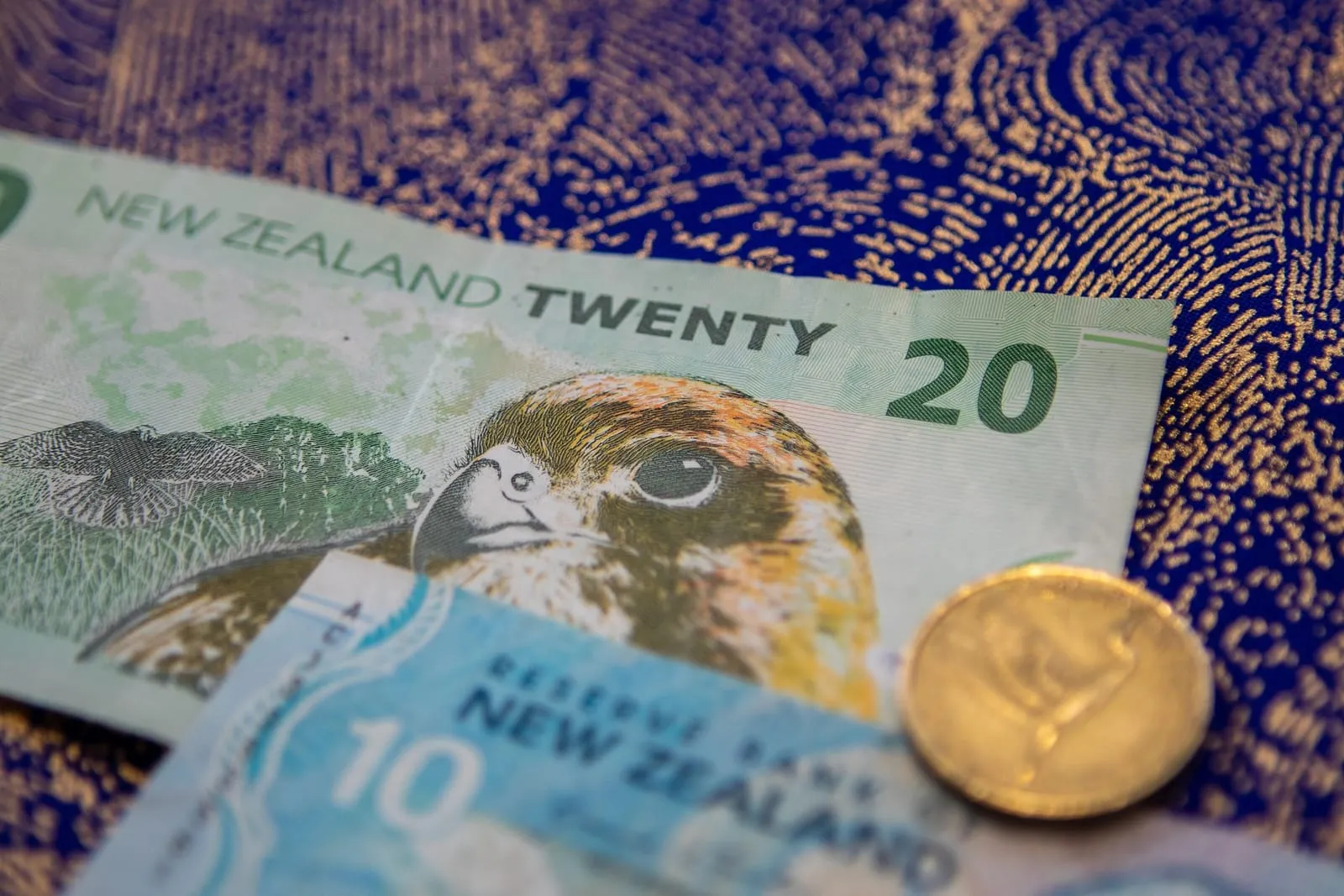
What crypto is not is legal tender. Only New Zealand dollar notes and coins issued by the Reserve Bank carry that status, so a café, a landlord or the Government can always refuse crypto. And legal doesn’t mean unregulated. Instead of one crypto law, Aotearoa applies a set of existing laws — financial markets, anti-money laundering, tax, consumer — to crypto activity. Which agency cares depends on what you or a business are doing.
Who regulates crypto in NZ?
Four public bodies matter. The Department of Internal Affairs supervises crypto businesses for money laundering. The Financial Markets Authority regulates financial products and services and polices misleading conduct. Inland Revenue taxes your gains — covered in depth in our crypto tax guide. The Reserve Bank oversees money and payments and has been cautious on stablecoins. Behind them, the Ministry of Justice writes the AML law and Parliament passes it.
The FMA: no crypto regime, but existing law applies
The FMA’s guidance for crypto businesses is blunt: New Zealand has no crypto-specific regime, so the FMA applies the Financial Markets Conduct Act 2013 and related law. Whether a token is a “financial product” depends on its economic substance, not its label — a token that promises a share of profits may be a security, while plain bitcoin generally isn’t. The FMA can also designate a product in or out of the regime.
Most exchanges fall into the financial-service category of operating a value transfer service. That means they must register on the Financial Service Providers Register (FSPR) and belong to an approved dispute resolution scheme, so a customer has somewhere free to take a complaint. Registration is not a licence: it doesn’t mean the FMA has checked a platform’s solvency, custody or reserves.
The clearest example of the FMA using its powers came in March 2026, when it declared the NZDD stablecoin, issued by ECDD Holdings in the Easy Crypto group, not a financial product from 11 March 2026. The designation came out of the FMA’s fintech sandbox pilot, and fair-dealing and FSPR obligations still apply. The FMA has said it wants to expand the sandbox and explore a restricted “on-ramp” licence, but details hadn’t been published when we checked. It also maintains a public list of warnings about unregistered and fake crypto businesses — see our scam watch page for recent examples.
DIA and the AML/CFT rules crypto businesses follow
Under the AML/CFT Act 2009, virtual asset service providers — exchanges, brokers, wallet and custody providers — are “financial institutions”, as the DIA’s VASP page sets out. That is why every legitimate platform asks for ID, proof of address and sometimes source of funds. Since 1 July 2026 the DIA has been the sole AML/CFT supervisor, replacing a split between the DIA, FMA and Reserve Bank.
Two thresholds matter for users. An occasional transaction in virtual assets of NZ$1,000 or more, outside an ongoing customer relationship, triggers customer due diligence. And crypto transfers are treated as wire transfers under the so-called travel rule: sender and recipient information must travel with the transfer, verified at NZ$1,000 and above, and transfers are presumed international unless the provider is satisfied everyone is in New Zealand. Sending coins to your own self-hosted wallet is not a wire transfer, though your exchange may ask you to confirm the wallet is yours. These rules also explain some bank friction, covered in our banks and crypto guide.
The 2025–2026 law changes, in order
The Ministry of Justice is running a multi-stage overhaul of anti-money-laundering law, and its legislative changes page lays out the sequence. Together with the crypto ATM saga, the timeline looks like this:
| Date | What happened | Effect on crypto users |
|---|---|---|
| Aug 2023 | Finance and Expenditure Committee crypto inquiry reports | No new regime; Government mostly chose to monitor |
| 9 Jul 2025 | Cabinet agrees in principle to ban crypto ATMs | Announcement only — never enacted |
| 26 Nov 2025 | Statutes Amendment Bill passes | Lighter address checks for low-risk customers |
| 1 Apr 2026 | CARF data collection starts | Exchanges collect tax-residency details for IRD |
| 18 May 2026 | AML/CFT Amendment Act and Supervisor, Levy Act pass | More risk-based checks; single supervisor |
| 1 Jul 2026 | DIA becomes sole AML/CFT supervisor | One regulator for every crypto business |
| 9 Jul 2026 | ATM ban dropped for “guardrails” | Machines stay; cash limits possible later |
| ~1 Sep 2026 | AML/CFT (Omnibus) Amendment Bill introduced | Power to cap cash crypto purchases by regulation |
| Early 2027 | Ministry of Justice consultation on cash thresholds | Expected; depends on the next government |
The Omnibus Bill is the one to watch. Beyond crypto ATMs it introduces simplified due diligence, an infringement regime, a structuring offence and a higher maximum penalty for money laundering. MinterEllison’s analysis expects it to run through 2027, possibly into 2028, ahead of New Zealand’s next FATF evaluation.
What happened to the crypto ATM ban?
In July 2025 Associate Justice Minister Nicole McKee announced Cabinet had agreed in principle to ban “virtual currency ATMs”, citing their use by scammers and money launderers. Plenty of overseas crypto media reported the ban as done. It wasn’t. On 9 July 2026 the same minister announced crypto ATMs would get “guardrails, not the guillotine”: instead of a ban, regulation-making powers to restrict cash transactions for virtual assets, such as a maximum per transaction, and a ban on cash for high-risk assets only if clear evidence of harm appears.
The Omnibus Bill would make buying or selling crypto for cash above a prescribed threshold an offence — but no threshold has been chosen, consultation isn’t expected until early 2027, and Parliament dissolved ahead of the 7 November 2026 election. Our Bitcoin ATM guide covers the machines, fees and ID rules as they stand.
Stablecoins, the Reserve Bank and digital cash
The Reserve Bank has historically been wary of stablecoins, citing risks such as people shifting savings into foreign-currency tokens, and we found no dedicated stablecoin regime in force. The only NZ-specific decision is the FMA’s NZDD designation above. If you hold USDT or USDC, you are relying on the foreign issuer, not any NZ protection — our USDT guide explains the trade-offs.
The Reserve Bank’s own project, a possible central bank “digital cash”, has been put on hold. In October 2026 it said it would pause the work to focus on modernising the payments system, including real-time retail payments. No decision to issue digital cash was ever made.
Is a crypto licensing regime coming?
Not yet. The FMA’s March 2026 tokenisation submissions report notes New Zealand still has no purpose-built virtual-asset regime and no licensing path for VASPs, unlike the EU under MiCA or Singapore. The 2023 Finance and Expenditure Committee inquiry made a series of recommendations but stopped short of an integrated crypto framework, and the Government’s response, as summarised by MinterEllison, was largely to keep monitoring.
There is political interest. At the CryptoWinter conference in Queenstown in August 2026, the ACT Party announced a policy called “Unlocking New Zealand’s Digital Economy”, reported by BlockchainNZ. That is a party policy, not Government policy, and its fate depends on the election and coalition talks.
Can Kiwis legally use overseas exchanges, P2P and DeFi?
Yes. No New Zealand law stops an individual opening an account with a foreign exchange, trading peer-to-peer with another person, using a DeFi app or mining at home. The rules mostly bite on businesses that provide crypto services, not on people using them. Several large overseas platforms serve New Zealanders through a locally registered company; others serve Kiwis from abroad with no New Zealand entity at all — which is legal for you, but means a New Zealand dispute scheme may not be able to help if something goes wrong. Our Binance review walks through what that looks like in practice.
Peer-to-peer trading is legal too, but this is where the AML rules come back to haunt ordinary people. If you regularly buy and sell crypto for others as a business, you may be a reporting entity yourself. And if you accept a bank transfer from a stranger who turns out to be moving stolen money, your account can be frozen and you can be treated as a money mule. Our P2P guide covers how to avoid that. Whatever route you use, taxable gains still need to be declared — overseas platforms will increasingly report to IRD through other countries’ tax authorities under CARF.
How to check a crypto provider is legitimate
Because no licence exists, checking a platform is on you. Start with the FSPR: search the platform’s legal entity name (not just its brand) and confirm it is registered, not deregistered, and which dispute resolution scheme it belongs to. Next, search the FMA’s warnings and alerts for the name and website. Then read the terms to see which company holds your money and which country’s law applies — many platforms serve Kiwis from overseas entities. Finally, make a small deposit and a small withdrawal before trusting it with serious money.
Our buying guide and the platform comparison on our home page list FSPR numbers where they exist. If a platform cannot show any registration anywhere, or pressures you to move fast, treat it as a warning sign.
What happens next?
Over the next year, expect four things. Exchanges finish their first CARF year on 31 March 2027 and report to IRD by 30 June 2027. The Omnibus Bill’s future, and any cash cap on crypto ATMs, will be decided after the election, with Ministry of Justice consultation pencilled in for early 2027. The DIA may set an industry levy under the new supervisor law. And the FMA may say more about its sandbox and a restricted licence. We update this page as those decisions land.
Frequently asked questions
Is crypto legal in NZ?
Yes. Buying, holding, selling and spending crypto is legal in New Zealand. It is not legal tender, so nobody has to accept it, and businesses that exchange or hold crypto for customers must follow anti-money-laundering rules supervised by the Department of Internal Affairs. Profits are generally taxable by IRD.
Who regulates crypto in New Zealand?
Several agencies share it. The DIA supervises crypto businesses under the AML/CFT Act, and has been the only AML supervisor since 1 July 2026. The FMA handles conduct and steps in when a token is a financial product. IRD handles tax, and the Reserve Bank watches stablecoins and payments. There is no single crypto regulator or licence.
Do crypto exchanges need a licence in NZ?
Not a crypto-specific one, because no such licence exists yet. Exchanges generally must register on the Financial Service Providers Register and join an approved dispute resolution scheme, and they are reporting entities under the AML/CFT Act. Registration is not the same as being licensed or supervised for prudential safety.
Is Bitcoin legal tender in New Zealand?
No. Only New Zealand dollar notes and coins issued by the Reserve Bank are legal tender. A shop, landlord or employer can agree to accept or pay bitcoin, but nobody can be forced to, and tax is still worked out in NZ dollars.
Are crypto ATMs banned in NZ?
No. A ban was announced in July 2025 but reversed on 9 July 2026. The AML/CFT (Omnibus) Amendment Bill would instead let the Government set a maximum cash amount for buying or selling crypto. Until that passes and regulations are made — not before 2027 — there is no cash cap.
Is Binance legal in New Zealand?
Kiwis can legally use overseas exchanges, including Binance, which operates locally through an FSPR-registered company. Legal to use is not the same as protected: check the entity on the register, read whose law governs your account, and see our Binance review for the practical details.
Sources & verification
Every source below was opened and checked on 15 October 2026. Where a figure comes from an aggregator, map or community source rather than the operator or a regulator, we say so in the text.
- FMA — Cryptocurrencies (consumer guidance)
- FMA — Cryptocurrency services (business guidance)
- FMA — Sandbox expansion and NZDD designation (12 Mar 2026)
- FMA — Tokenisation in financial markets: submissions report (Mar 2026)
- DIA — AML/CFT and virtual asset service providers
- DIA — New era for AML/CFT regulation (1 Jul 2026)
- Ministry of Justice — AML/CFT legislative changes (updated 14 Jul 2026)
- Beehive — “Crypto ATMs to get guardrails, not the guillotine” (Jul 2026)
- AML/CFT (Omnibus) Amendment Bill 342-1
- MinterEllison — Final AML/CFT amendment bill introduced (2 Sep 2026)
- RBNZ — Digital cash — work paused, Oct 2026
- MinterEllison — Government response to the cryptocurrency inquiry